





Wisdom Teeth Removal Near Novena, Singapore
Wisdom teeth assessment and removal for patients in Novena at Alpha Dental Group, 20 Cecil Street. Covers signs, the procedure, recovery, risks, MediSave and FAQs.
Wisdom teeth are the last molars to develop, usually coming through in the late teens or early twenties. Some grow in without any trouble. Others become impacted, tilt at an angle or never find enough room, which can lead to pain, swelling, inflamed gums and food getting trapped at the back of the mouth.
If you live in Novena or travel through Singapore's Central Business District for work, a sore wisdom tooth is easier to deal with when you know where to go. Located at 20 Cecil Street, Alpha Dental Group provides dental assessments to find out whether a wisdom tooth needs attention, and whether removal, monitoring or specialist input makes the most sense for you. You can also see the full range of dental services for patients in Novena.
What Are Wisdom Teeth?
Wisdom teeth are the third molars at the very back of the mouth. Up to four can develop, one in each corner of the jaw, and they usually emerge between the ages of 17 and 25. Timing varies, and some people never develop all four.
When there is enough room, a wisdom tooth can erupt fully and work like any other molar. When the jaw is short on space or the tooth sits in an awkward position, it may stay trapped beneath the gum or within the jawbone. This is called impaction.
The angle and depth of the tooth matter a great deal. A wisdom tooth may sit upright, lean towards the tooth in front, tilt backwards or lie almost flat. It may be covered only by gum tissue, or lie partly or fully within the bone. Your dentist looks at these details on your dental imaging because they decide how straightforward the removal is likely to be.
When Might You Need Wisdom Teeth Removal?
Wisdom teeth do not always need to come out. If they are healthy, fully erupted, working properly and easy to clean, a dentist may simply recommend keeping an eye on them.
Removal is usually considered when a wisdom tooth is causing symptoms or putting your oral health at risk. Common reasons include:
- Repeated gum inflammation: A partly erupted wisdom tooth can trap food and bacteria under the surrounding gum.
- Tooth decay: These teeth sit at the back and are hard to brush and floss, so cavities can form quickly.
- Infection: Bacteria collecting around a partly erupted tooth can cause pain, swelling and a bad taste in the mouth.
- Damage to the neighbouring tooth: An impacted wisdom tooth can contribute to decay in the molar beside it. If that molar is already badly affected, your dentist may also discuss root canal treatment in Novena as a way to save it.
- Cysts or other problems around the tooth: Occasionally a cyst or similar change develops around an impacted tooth.
- Ongoing discomfort: Recurring pain should be examined so the cause can be found and treated.
A dental examination, supported by X rays where needed, shows whether removal is appropriate. Taking out every wisdom tooth as a precaution is not automatically necessary.
What Are the Signs of Problematic Wisdom Teeth?
Symptoms depend on where the tooth is sitting and whether inflammation or infection has set in. Possible warning signs include:
- Pain or tenderness at the back of the mouth.
- Swollen, red or bleeding gums around a wisdom tooth.
- Difficulty opening your mouth fully.
- Discomfort when chewing.
- Food repeatedly caught around the back molars.
- An unpleasant taste or bad breath that keeps returning.
- Swelling around the jaw or cheek.
These symptoms can have other causes, so a proper assessment is the only reliable way to tell. Seek urgent dental or medical care if you notice significant facial swelling, fever or difficulty swallowing. Difficulty breathing or swelling that spreads quickly needs emergency medical attention.
What Happens During Wisdom Teeth Removal?
What is involved depends on whether the tooth has erupted fully, is partly impacted or is still beneath the gum or bone.
Initial Dental Examination
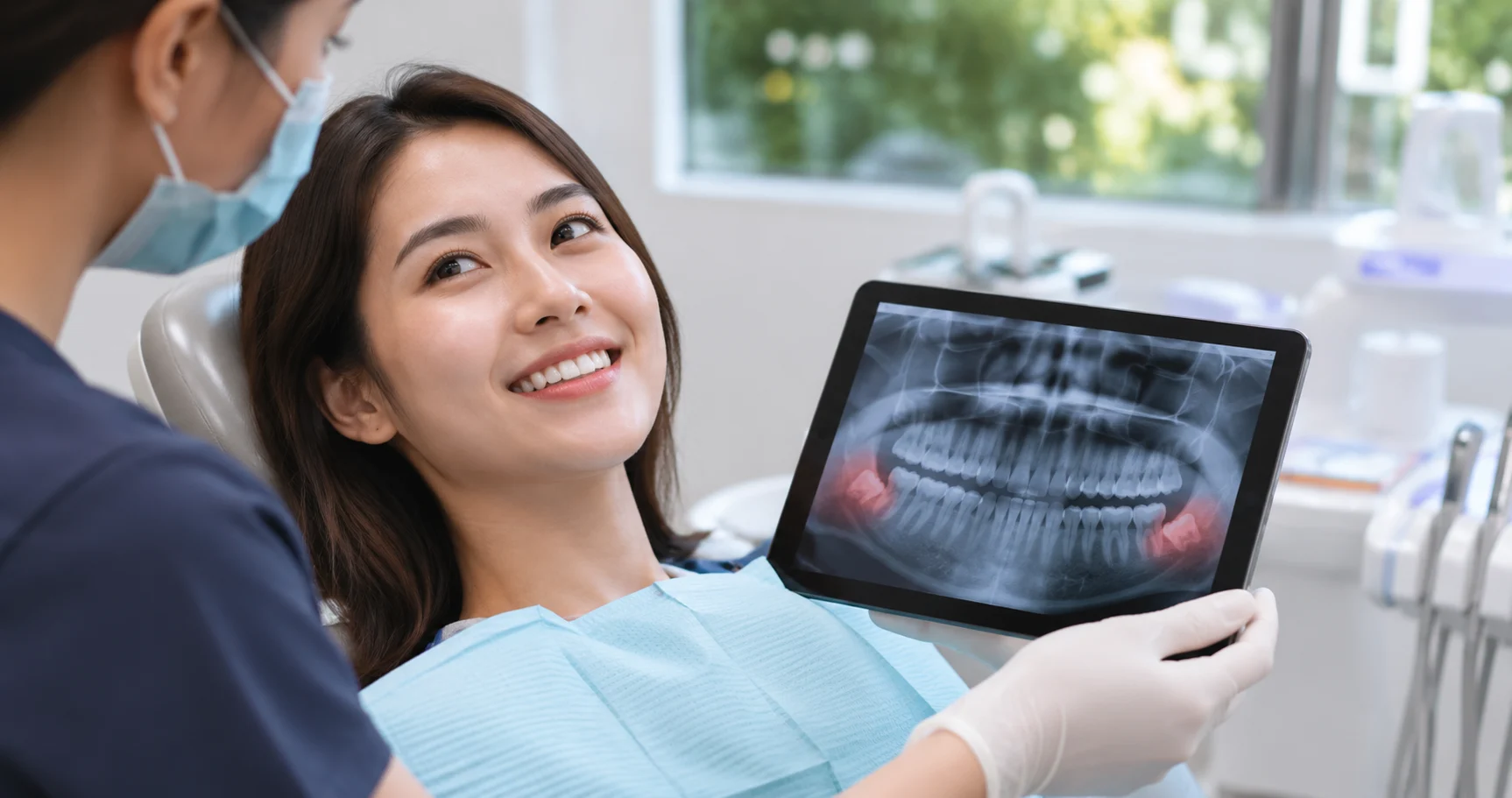
Your dentist reviews your symptoms, examines your mouth and checks the position of the wisdom tooth. Dental X rays are often recommended to show the angle of the tooth, its roots and how close it sits to nearby structures. For more complex cases, additional imaging may be suggested when it will change how the treatment is planned.
Local Anaesthesia
Local anaesthesia numbs the area before the tooth is removed. You may feel pressure or movement, but the area itself should be numb. If anything feels sharp, say so and your dentist can adjust.
Simple Extraction
If the wisdom tooth has erupted fully and is easy to reach, your dentist may be able to remove it with a relatively straightforward extraction.
Surgical Extraction
An impacted tooth often calls for a surgical approach. This can involve a small cut in the gum, removing a little bone around the tooth, or dividing the tooth into smaller pieces so it comes out more easily. Stitches may be placed afterwards. For particularly complex cases, an oral and maxillofacial surgeon may be involved.
Aftercare Instructions
Before you leave, your dentist explains how to manage discomfort, keep the area clean and protect the extraction site. Following those instructions closely helps the area heal and lowers the chance of complications.
Is Wisdom Teeth Removal Painful?
The procedure itself is done under anaesthesia, so pain during treatment should be minimal. You may notice pressure, particularly during a surgical extraction.
Once the numbness wears off, some soreness, swelling and jaw stiffness are normal. These usually ease gradually over several days, though recovery differs from person to person and depends on how complex the extraction was. Your dentist can recommend suitable pain relief and ways to manage swelling. If pain keeps getting worse instead of settling, contact the clinic so it can be checked.
How Long Does Wisdom Teeth Removal Take?
There is no single answer, because every wisdom tooth is different. The time needed depends on:
- Whether the tooth has erupted fully.
- The angle and depth of any impaction.
- The shape and number of the roots.
- How close the tooth is to important nerves or other structures.
- Whether one tooth or several are being removed.
- Whether a surgical approach is needed.
A straightforward extraction is usually quicker than a surgical one. After reviewing your examination and imaging, your dentist can give you a more realistic idea for your own case.
What Is the Recovery Time After Wisdom Teeth Removal?
Most people find the first two to three days the hardest, with the most swelling and tenderness, followed by gradual improvement. The gum can take longer to heal fully, especially after a surgical extraction. To support healing:
- Rest and avoid strenuous activity for the period your dentist advises.
- Take pain relief exactly as instructed.
- Use a cold compress on the outside of the cheek if recommended to help with swelling.
- Start with soft foods such as yoghurt, porridge, mashed vegetables or scrambled eggs.
- Drink plenty of water, and avoid very hot food and drinks while the area is still numb.
- Keep your mouth clean following the brushing and rinsing guidance you are given.
- Avoid smoking and vaping, which can interfere with healing.
- Skip vigorous rinsing, spitting and drinking through a straw early on if advised, as these can disturb the blood clot.
Contact your dentist if swelling or pain gets worse after first improving, or if you have persistent bleeding, fever or any symptom that worries you.
What Are the Possible Risks of Wisdom Teeth Removal?
Wisdom tooth removal is a common procedure, but like any surgery it carries some risks. These can include:
- Bleeding or swelling.
- Infection.
- Dry socket, which happens when the protective blood clot is lost or breaks down before healing is complete.
- Temporary difficulty opening the mouth.
- Injury to nearby teeth or surrounding structures.
- Temporary, and occasionally longer lasting, changes in feeling in the lip, chin or tongue, particularly when a lower wisdom tooth sits close to a nerve.
How likely these are depends on the position of the tooth, how complex the procedure is and your general health. Your dentist should walk you through the risks and benefits that apply to you before any treatment starts.
Should You Remove or Monitor Your Wisdom Teeth?
Healthy, fully erupted wisdom teeth that are easy to clean can often be left in place and checked during routine dental visits. Your dentist may suggest periodic examinations and X rays when they are clinically appropriate.
A tooth that is causing recurring inflammation, significant decay, infection or damage to the tooth beside it is a different story. Leaving an existing problem alone can let it progress. The decision should rest on what your dentist finds in your mouth, not on age alone or the idea that every wisdom tooth must come out.
If a tooth lies close to a major nerve or looks especially difficult to remove, your dentist may discuss referral to an oral and maxillofacial surgeon.
How Much Does Wisdom Teeth Removal Cost, and Can You Use MediSave?
The cost depends on the tooth, not a fixed price list. A fully erupted tooth that comes out easily is a very different procedure from a deeply impacted one, and factors such as the position of the tooth, the shape of the roots, the imaging needed and the number of teeth being removed all play a part. After your examination, the dental team can explain the expected fee before you decide to go ahead.
MediSave may be used for approved surgical dental procedures, and surgical removal of impacted wisdom teeth is a common example. Eligibility, the specific procedure and withdrawal limits all apply, and simple extractions are generally not claimable. Alpha Dental Group is accredited for MediSave claims for procedures such as wisdom tooth surgery, and eligible CHAS cardholders may also receive subsidies for some extractions. The team can confirm what applies to your treatment before you start.
Wisdom Teeth Removal Near Novena, Singapore
If you are looking for a wisdom teeth assessment near Novena, Alpha Dental Group is at #01-04 PLUS, 20 Cecil Street, Singapore. The clinic is accessible to patients travelling from Novena and other areas, including Raffles Place, Marina Bay, Shenton Way and Tanjong Pagar.
If you are dealing with pain at the back of your mouth, gums that keep swelling up or a wisdom tooth that is hard to clean around, an examination can help pinpoint the cause. The dental team can look at the affected area, recommend imaging when it is needed and talk you through whether monitoring, extraction or specialist referral suits your situation.
Book a Wisdom Teeth Assessment Near Novena
If wisdom tooth pain is getting in the way of eating or sleeping, or you simply want to know whether a tooth needs to come out, an assessment will give you a clear answer.
At Alpha Dental Group, the dental team can check your symptoms, review the position of your wisdom teeth and talk through the next steps based on your oral health. Contact the clinic to arrange an appointment and find out whether monitoring, wisdom teeth removal or specialist referral is right for you.
Frequently Asked Questions
At what age should wisdom teeth be removed?
Wisdom teeth commonly come through between 17 and 25, but there is no set age for removal. The decision depends on symptoms, tooth position, oral health and clinical findings. Healthy wisdom teeth can be monitored rather than removed.
Does every impacted wisdom tooth need to be removed?
No. An impacted wisdom tooth that is not linked to any disease can sometimes be monitored. Your dentist looks at the position of the tooth, the surrounding tissues and the possible risks before recommending anything.
How long does it take to recover from wisdom teeth removal?
Many people feel the most discomfort and swelling in the first two to three days, with steady improvement after that. Recovery depends on how complex the extraction was and how you heal.
Can I eat normally after wisdom teeth removal?
Start with soft foods and return to your usual diet gradually as comfort improves. Avoid hard, crunchy or very hot foods at first, and follow your dentist's instructions.
What is dry socket after wisdom teeth removal?
Dry socket occurs when the blood clot protecting the extraction site is lost or breaks down before healing is complete. It can cause significant pain, often a few days after the extraction. Contact your dentist if you develop severe or worsening pain.
Is wisdom teeth removal a surgical procedure?
Not always. A fully erupted wisdom tooth may come out with a simple extraction. An impacted tooth may need surgical removal, which can involve a cut in the gum and, in some cases, removing a small amount of bone or sectioning the tooth.
Can I use MediSave for wisdom teeth removal?
MediSave may be used for approved surgical procedures, which can include surgical removal of impacted wisdom teeth, subject to eligibility and withdrawal limits. Simple extractions are generally not claimable. Ask the clinic team to confirm what applies to your treatment before you begin.
How much does wisdom teeth removal cost?
The fee depends on the position of the tooth, how complex the removal is and how many teeth are involved. The dental team can give you an estimate after examining you and reviewing your imaging.
When should I seek help for wisdom tooth pain?
Arrange a dental assessment if you have persistent pain, swollen gums or difficulty chewing. Significant facial swelling, fever or difficulty swallowing needs urgent assessment, and difficulty breathing or rapidly spreading swelling needs emergency medical care.


