





.svg)










Let's Start With the Question Most People Really Want Answered
The moment someone hears the words "root canal," a few things usually happen. They stop scrolling. They look worried. And then they ask the same urgent question: "Is it going to hurt?"
That is a completely fair response. Root canals have had a rough reputation for years. If you ask a colleague or someone who remembers dental treatment from decades ago, you will probably hear a story that sounds far scarier than modern reality.
The truth is that modern endodontic therapy is designed to eliminate pain caused by an infected or inflamed tooth, not create more of it. If you are experiencing structural tooth trouble, understanding the realities of this common procedure can help you approach your upcoming visit with complete peace of mind.
What Is a Root Canal?
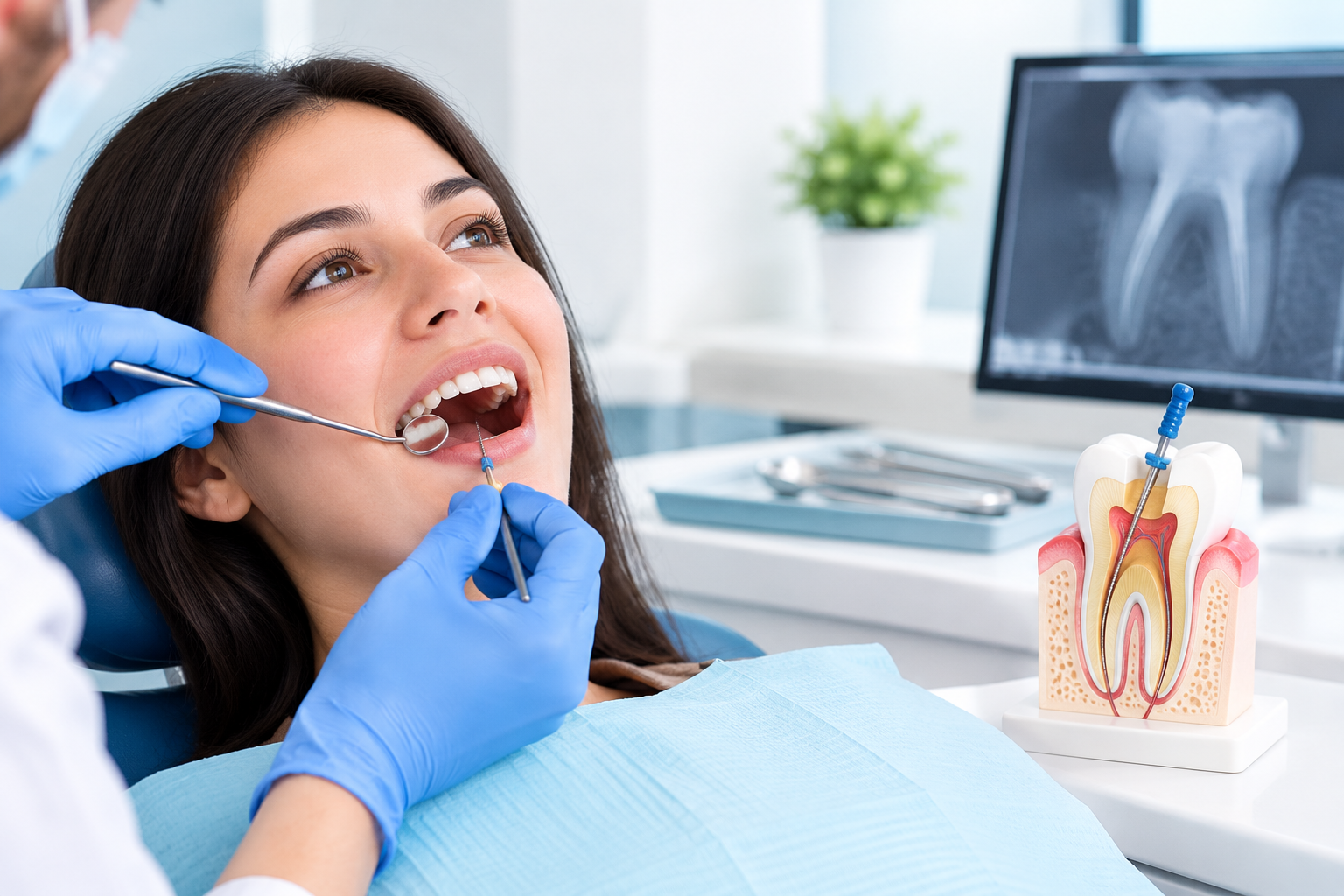
A Root Canal Treatment is a highly routine restorative procedure used when the soft inner tissue of a tooth, known as the dental pulp, becomes irreversibly inflamed or infected.
This soft tissue contains the tooth's internal nerves and blood supply. When bacteria breach the outer protective enamel, this internal chamber becomes compromised. This deep-seated inflammation typically occurs due to:
- Deep, progressive dental decay that travels beneath the enamel and dentin layers
- A physical crack, split, or deep structural fracture in the tooth
- Severe physical dental trauma from an accident or sudden impact injury
- Repeated, extensive dental procedures on the same tooth structure
The procedural goal is to carefully remove the compromised tissue, disinfect the hollow canals within the root system, and seal the space to protect it from future bacterial invasion. This targeted intervention allows your natural tooth to remain securely in place, preserving your biting strength and preventing the need for a total extraction.
Is a Root Canal Painful?
This is where many patients are pleasantly surprised. The active infection or inflammation inside your tooth is actually far more uncomfortable than the treatment itself.
By the time an adult requires an endodontic procedure, they are often already dealing with a collection of painful symptoms, including:
- A persistent, throbbing toothache that worsens when lying down
- Sharp, shooting sensitivity to hot or cold foods that lingers for minutes
- Acute, local pain when chewing or applying direct biting pressure
- Puffy, tender, or swollen gum tissue surrounding the affected area
Modern procedures are carried out using advanced local anaesthetics that completely numb the tooth and the surrounding tissues before any work begins. Most patients describe the physical sensation during treatment as being virtually identical to receiving a standard, routine filling under General Dentistry. It is incredibly common for patients to comment immediately after their procedure: "That wasn't nearly as bad as I thought it would be."
Why Do Root Canals Have Such a Bad Reputation?
Much of this lingering anxiety comes from old historical stories before modern dental numbing techniques were perfected.
Furthermore, many people accidentally confuse the intense pain caused by the infected tooth with the actual treatment. Because patients often experience significant, throbbing discomfort in the days leading up to their appointment, they inadvertently associate that memorable pain with the procedure itself, rather than the deep bacterial infection that made the medical intervention necessary in the first place.
What Will I Feel During the Procedure?
While everyone's personal threshold varies slightly, you should not feel any sharp or painful sensations during the process.
Once the local anaesthetic has taken full effect, you will primarily feel mild pressure, slight movement, and minor vibrations as the dentist cleans and shapes the internal channels. It is no different from having a deep cavity repaired. While sitting in a dental chair might not be your favourite way to spend an afternoon, the actual physical experience is highly predictable and routine.
What About After the Root Canal?
It is entirely normal for the treated tooth and the surrounding gum tissue to feel a little tender or bruised for a few days after your appointment. This is especially true when applying direct biting or chewing pressure.
This temporary tenderness is simply a result of your body's natural healing process as the ligaments surrounding the root tips settle down. Many professionals return to their office or carry on with their normal daily routines immediately after leaving the clinic. Any minor post-operative sensitivity is highly manageable and vastly less intense than the agonising toothache that brought you into the clinic.
Is Root Canal Treatment Safe?
Yes, root canal treatment is an exceptionally safe, time-tested, and scientifically proven dental procedure. Millions of root canals are performed globally every single year with incredibly high success rates.
The treatment focuses strictly on removing dead or dying tissue from within the tooth while preserving the hard, outer structure. Keeping your natural tooth is always the healthiest choice for your mouth. It preserves your natural jaw alignment, maintains optimal chewing efficiency, and prevents neighbouring teeth from drifting out of place.
If you choose to ignore the infection and avoid treatment, the bacteria will eventually destroy the surrounding jawbone, forming a painful abscess. If the tooth eventually degrades beyond repair, your only remaining option would be a surgical extraction followed by a more complex replacement, such as a bridge or permanent Dental Implants.
Are There Alternatives to a Root Canal?
The only real alternative to a root canal is a complete tooth extraction.
While removing the tooth does eliminate the local infection, leaving an empty gap in your smile can cause long-term bite complications. Over time, your adjacent teeth will tilt and drift into the open space, which can disrupt your bite and cause localised crowding. If you choose an extraction, it is highly recommended to fill the gap with an advanced solution like Dental Implants to keep your smile structurally stable. Ultimately, saving your natural tooth via a root canal is almost always the most conservative, cost-effective, and efficient pathway.
Root Canal Treatment in Singapore CBD
If you are dealing with a persistent toothache, lingering temperature sensitivity, or have been advised by another practitioner that you may require endodontic care, getting a detailed diagnostic evaluation is your next step.
Alpha Dental Group is located at 20 Cecil Street in the heart of the Singapore CBD. The clinic regularly provides comfortable, advanced root canal treatments and comprehensive check-ups to professionals working throughout Raffles Place, Marina Bay, Shenton Way, Tanjong Pagar, and Novena.
Choosing a centrally located clinic near Raffles Place allows you to address acute dental pain quickly during your lunch hour or right after your shift ends, minimising any disruption to your busy schedule. If you have questions about scheduling a diagnostic X-ray, you can reach our team directly through our Contact Us portal.
Conclusion
Root canals are one of the most widely misunderstood treatments in modern dentistry. While many people enter the office expecting severe discomfort, they leave realising that the procedure itself is straightforward, predictable, and remarkably pain-free.
At the end of the day, a root canal is designed to rescue your natural tooth and deliver lasting relief from the pain of a deep infection. If you have a tooth that is giving you trouble, booking a professional clinical consultation is the safest way to protect your long-term oral health.
To read more about our specific approach to saving infected teeth, visit our dedicated Root Canal Treatment page. If you want to address minor cavities or secure a regular scaling and polishing appointment, look through our options under General Dentistry. To book a detailed diagnostic scan with our CBD clinical team, feel free to visit our Contact Us page. You can also explore how we handle broader structural smile realignments or permanent tooth replacements by visiting our services for Invisalign and biocompatible Dental Implants.
Frequently Asked Questions
Q: Is a root canal more painful than a standard filling?
A: No. Thanks to modern local anaesthetics, the sensations you feel during a root canal are very similar to having a routine dental filling under General Dentistry. The procedure is designed to relieve pain, not cause it.
Q: Is root canal treatment completely safe?
A: Yes, it is an exceptionally safe and routine dental procedure. It has been utilised successfully for decades to eliminate internal dental infections while safely preserving the patient’s natural tooth structure.
Q: Will I feel pain or throbbing after my root canal is finished?
A: You may experience some mild, temporary tenderness or localised bruising for a few days following treatment, particularly when biting down. This is a normal part of the tissue healing process and settles down quickly.
Q: What happens if I choose to delay or avoid a root canal?
A: Dental infections cannot heal on their own. If you delay treatment, the bacteria will continue to spread into the surrounding jawbone, potentially leading to a severe dental abscess, intense systemic swelling, and eventual tooth loss.
Q: Can a root canal genuinely save a badly broken or decayed tooth?
A: In many cases, yes. As long as the tooth still has a solid, healthy root foundation within the jawbone, a Root Canal Treatment can clear out the infection, allowing the tooth to be fully rebuilt with a durable dental crown.




.svg)


