





.svg)








If you've been told that you need a root canal, one of your first questions is likely to be, "How much does root canal treatment cost in Singapore?"
The cost can vary depending on the tooth being treated, the complexity of the infection, the number of root canals involved, and whether additional treatment such as a dental crown is required.
As a general guide, root canal treatment in Singapore can range from around S$400 to S$1,400 or more per tooth, with front teeth generally costing less than premolars and molars. More complex cases or treatment provided by a specialist may cost more. The final fee can also vary between dental clinics and depending on the procedures included in the treatment.
It is important to remember that the root canal procedure itself may not represent the entire cost. Consultation fees, X-rays, a core build-up, and a dental crown may be charged separately.
What Is Root Canal Treatment?
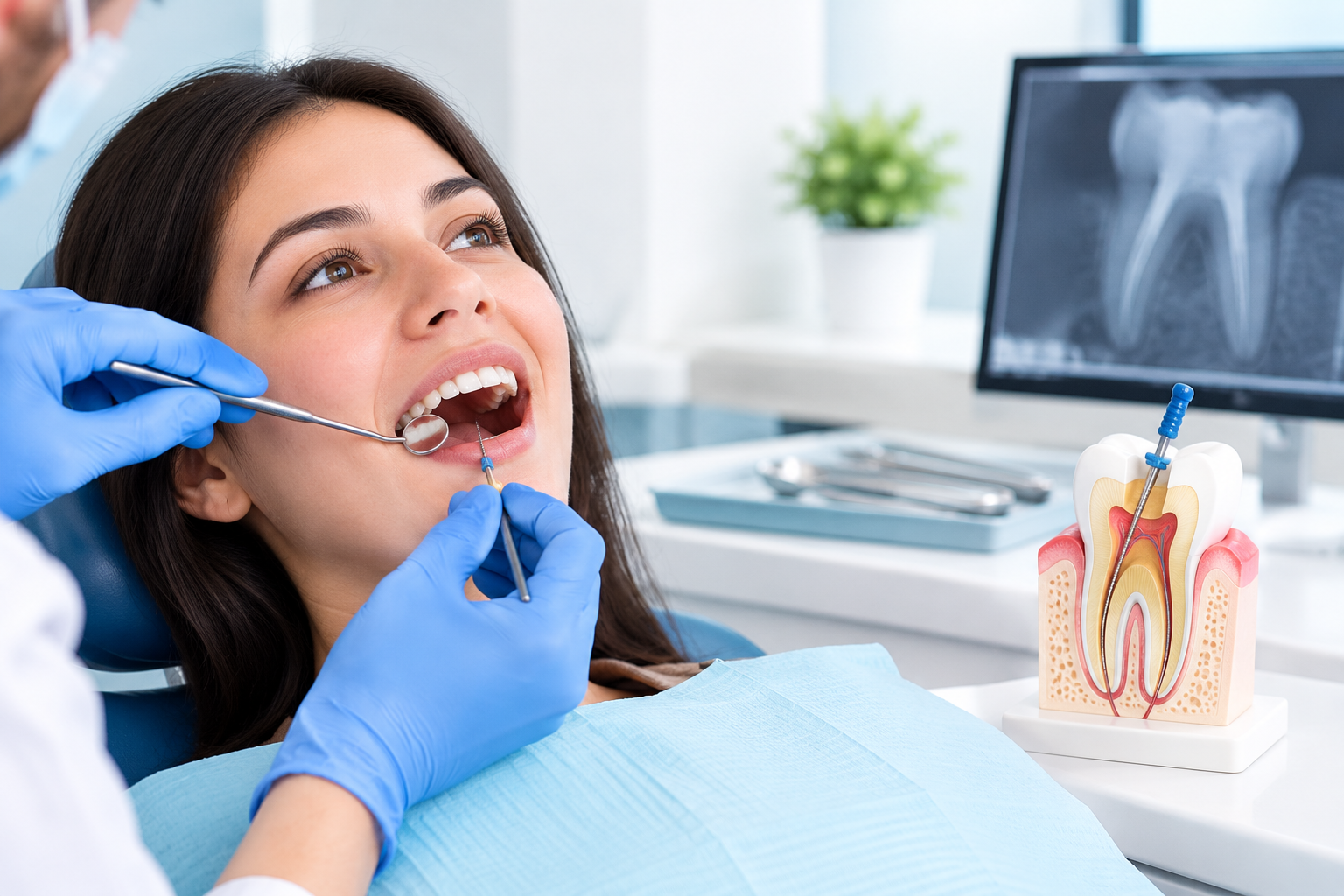
Root canal treatment is a dental procedure used to save a tooth when the soft tissue, or pulp, inside it becomes infected or severely inflamed.
The pulp contains nerves and blood vessels. When bacteria reach the pulp because of deep decay, cracks, trauma, or other damage, the tooth may become painful or develop an infection.
During root canal treatment, the dentist removes the infected or inflamed pulp, cleans and disinfects the root canals, and then fills and seals them.
The aim is to eliminate infection while preserving your natural tooth.
Saving the natural tooth can help maintain your ability to chew and prevent the need for tooth replacement.
How Much Does Root Canal Treatment Cost in Singapore?
There is no single price for root canal treatment because every case is different.
Current Singapore dental fee benchmarks published by the Ministry of Health list benchmark ranges of approximately:
- Anterior tooth: S$400–S$775
- Premolar: S$500–S$900
- Molar: S$872–S$1,400
These are fee benchmarks rather than guaranteed prices, and your actual treatment cost can vary depending on the clinic, complexity of the case, and additional procedures required.
Private dental clinics may quote different fees. For example, some clinics currently publish root canal treatment prices ranging from approximately S$500 to S$1,300 for general dental treatment, with specialist treatment potentially costing more.
For this reason, it is best to ask for a complete treatment estimate following your examination rather than relying only on the starting price advertised by a clinic.
Why Does Root Canal Treatment Cost More for Some Teeth?
The location and structure of the tooth have a significant effect on the cost.
Front Teeth
Front teeth, also called anterior teeth, generally have fewer root canals and are usually less complicated to treat.
As a result, root canal treatment for a front tooth is often less expensive than treatment for a molar.
Premolars
Premolars are located between the front teeth and molars. They can have more complicated root canal anatomy than front teeth, which may increase the time and skill required for treatment.
Molars
Molars are located at the back of the mouth and generally have multiple roots and canals.
Because molars can have more complicated anatomy, root canal treatment on these teeth is usually more expensive. MOH's current fee benchmarks also reflect this difference, with molar treatment having a higher benchmark range than anterior and premolar treatment.
What Factors Affect Root Canal Treatment Cost?
Several factors can influence the final price of your treatment.
1. Tooth Location
As mentioned above, front teeth are generally simpler to treat than premolars and molars.
The number and shape of the root canals can affect how much time and expertise are required.
2. Complexity of the Infection
A straightforward infection may be easier to treat than a tooth with extensive infection, unusual root anatomy, or significant damage.
If the infection is severe or the tooth has complicated canals, treatment may require additional time or specialist care.
3. Previous Root Canal Treatment
If a tooth has already undergone root canal treatment but has become infected again, you may require root canal retreatment.
Retreatment can be more complicated because the dentist may need to remove previous filling material and identify the cause of the persistent infection.
4. Dentist or Specialist
Some straightforward root canal procedures can be performed by a general dentist.
More complex cases may be referred to an endodontist, a dentist with specialised training in treating diseases and injuries affecting the dental pulp and root canals.
Specialist treatment may have a higher fee because of the additional expertise and equipment involved.
5. Condition of the Tooth
The amount of healthy tooth structure remaining can also affect the total cost.
A severely damaged tooth may require additional restorative treatment after the root canal to provide adequate strength and protection.
Does a Root Canal Include the Dental Crown?
Not always.
One of the most important things to ask when comparing root canal prices is whether the quoted fee includes the final restoration.
A root canal removes the infected pulp, but the tooth may need additional restoration afterwards. A crown is often recommended, particularly for teeth that have lost a significant amount of structure or for back teeth that experience substantial chewing forces.
A dental crown is generally a separate cost. Current Singapore fee benchmarks list permanent crowns at approximately S$750–S$1,400, although actual prices vary according to the material and clinic.
This means the total cost of saving a tooth can be considerably higher than the root canal procedure alone.
What Other Costs Should You Consider?
When budgeting for root canal treatment, remember that there may be additional charges for:
- Initial consultation
- Dental X-rays
- Additional diagnostic imaging
- Root canal treatment
- Temporary filling
- Core build-up or post
- Permanent dental crown
- Specialist consultation
- Root canal retreatment, if necessary
Some clinics include certain X-rays or other procedures within their root canal fee, while others charge them separately. For example, Advanced Dental states that some X-rays taken during and after treatment are included in its published root canal fees, while diagnostic X-rays taken beforehand and final restorations are excluded.
Always ask your dentist for a breakdown of the expected costs before starting treatment.
Can Root Canal Treatment Be Covered by CHAS?
Eligible patients may be able to receive CHAS subsidies for root canal treatment at participating clinics.
Current CHAS subsidy caps differ according to the patient's eligibility category and the type of tooth being treated. For example, the maximum subsidy amounts listed by CHAS include separate caps for anterior teeth, premolars, and molars.
If you have a CHAS card, Pioneer Generation or Merdeka Generation benefits, ask your dental clinic whether you are eligible for a subsidy and how much you may need to pay yourself.
The subsidy available will depend on your eligibility and the prevailing scheme requirements.
Can MediSave Be Used for Root Canal Treatment?
MediSave coverage for dental procedures depends on the specific procedure and current eligibility rules.
Singapore has expanded the use of Flexi-MediSave for certain dental treatments at eligible CHAS dental clinics and public healthcare institutions. From mid-2026, eligible seniors aged 60 and above may use Flexi-MediSave for root canal treatment and permanent crowns, subject to the prevailing scheme terms.
Because eligibility and claim limits can change, it is best to check with your dental clinic and the relevant scheme before beginning treatment.
Is Root Canal Treatment Worth the Cost?
For many patients, root canal treatment can be a worthwhile investment because it allows the natural tooth to be preserved.
An alternative is extraction, which may have a lower upfront cost. However, losing a tooth can create the need for replacement treatment such as a dental implant, bridge, or denture.
Replacing a missing tooth can therefore involve additional procedures and costs over time.
Your dentist can explain whether your tooth is suitable for root canal treatment or whether extraction would be a more appropriate option based on its condition.
If your tooth can be successfully saved, preserving it may help maintain your natural bite and chewing function.
What Happens During Root Canal Treatment?
The exact process varies depending on the tooth and complexity of the case, but treatment commonly involves several stages.
- Dental Examination
Your dentist examines the affected tooth and surrounding tissues. X-rays are usually taken to assess the roots and determine the extent of the problem. - Local Anaesthetic
Local anaesthetic is used to numb the area and help keep you comfortable during the procedure. - Removing the Infected Pulp
The dentist creates access to the inside of the tooth and carefully removes the infected or inflamed pulp. - Cleaning and Shaping the Canals
The root canals are cleaned, disinfected, and shaped so they can be properly sealed. - Filling and Sealing
The cleaned canals are filled and sealed to help prevent bacteria from entering again. - Restoring the Tooth
Depending on the amount of tooth structure remaining, you may need a permanent filling, core build-up, or crown to restore and protect the tooth.
Root canal treatment may take one or more appointments depending on the complexity of the case.
What Happens If You Delay Root Canal Treatment?
If a tooth has an infected or severely inflamed pulp, delaying treatment may allow the infection to progress.
You may experience:
- Persistent toothache
- Sensitivity to hot or cold
- Pain when biting or chewing
- Swelling around the tooth
- A gum abscess
- Bad taste or drainage
- Darkening of the affected tooth
However, some dental infections may cause little or no pain, particularly as the condition progresses.
This is why persistent dental symptoms should not be ignored. A prompt dental examination can help identify the underlying problem and determine whether root canal treatment is necessary.
How Can You Avoid Needing a Root Canal?
Not every root canal can be prevented, but good preventive dental care can reduce the risk of severe tooth decay and other problems that may eventually affect the pulp.
You can help protect your teeth by:
- Brushing twice a day with fluoride toothpaste
- Cleaning between your teeth daily
- Limiting sugary foods and drinks
- Wearing a mouthguard during contact sports
- Treating cavities before they become extensive
- Attending regular dental check-ups
- Seeking treatment for cracked or damaged teeth promptly
Regular preventive dental care allows your dentist to identify problems earlier, when treatment may be simpler.
Root Canal Treatment at Alpha Dental Group Singapore CBD
At Alpha Dental Group, we provide personalised dental care based on each patient's individual needs.
If you have persistent tooth pain, sensitivity, swelling, or have been told that you may need a root canal, our dental team can assess the affected tooth and explain the available treatment options.
Your dentist can also discuss the expected costs of root canal treatment, including whether additional restorative treatment such as a crown may be required.
Conveniently located at 20 Cecil Street in Singapore's CBD, our clinic is accessible for patients working around Raffles Place, Marina Bay, Shenton Way, and Tanjong Pagar.
Whether you need an assessment for a painful tooth or want to understand your options before proceeding with treatment, our team can help you make an informed decision about your oral health.
Conclusion
The cost of root canal treatment in Singapore varies depending on the tooth involved, the complexity of the case, the dentist or specialist providing treatment, and whether additional procedures are required.
As a general guide, MOH's current fee benchmarks range from around S$400–S$775 for anterior teeth, S$500–S$900 for premolars, and S$872–S$1,400 for molars. These are benchmarks rather than fixed prices, and your actual cost may differ.
You should also consider the cost of X-rays, consultations, restorative treatment, and potentially a crown when calculating the total cost of saving the tooth.
If you're experiencing tooth pain or have been advised that you need a root canal, don't delay seeking professional advice. An assessment can help determine whether the tooth can be saved and provide you with a personalised treatment plan and cost estimate.
To learn more about general dentistry services or to arrange an assessment, contact Alpha Dental Group today.
Frequently Asked Questions
Q: How much does root canal treatment cost in Singapore?
A: Root canal treatment costs vary depending on the tooth and complexity of the case. MOH's current fee benchmarks are approximately S$400–S$775 for anterior teeth, S$500–S$900 for premolars, and S$872–S$1,400 for molars. Your actual fee may vary by clinic and treatment requirements.
Q: Is a dental crown included in the root canal cost?
A: Not necessarily. A crown is often a separate treatment and may be recommended to protect a tooth after root canal treatment, particularly when significant tooth structure has been lost.
Q: Why does a root canal cost more for a molar?
A: Molars generally have more roots and canals and can have more complicated anatomy, making treatment more time-consuming and technically demanding than treatment on front teeth.
Q: Can CHAS help cover the cost of a root canal?
A: Eligible CHAS, Pioneer Generation, and Merdeka Generation patients may receive subsidies for root canal treatment at participating clinics, subject to current eligibility requirements and claim limits.
Q: Can I use MediSave for root canal treatment?
A: Certain eligible patients may be able to use Flexi-MediSave for root canal treatment and permanent crowns under current scheme rules. Eligibility and claim limits apply, so check with your dental clinic before treatment.
Q: Is root canal treatment better than extraction?
A: When a tooth can be predictably saved, root canal treatment allows you to keep your natural tooth. Extraction removes the tooth and may require replacement with an implant, bridge, or denture.






.svg)


